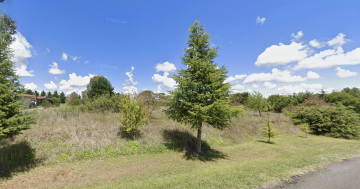
Scott Montgomery of Grabben Gullen is keen to help reform Crookwell Aero Club.
Aviators from a wide area have been invited to a public meeting to reform the Crookwell Aero Club.
Businessman and former helicopter pilot from nearby Grabben Gullen Scott Montgomery has convened the meeting for Sunday 28 June at 11 am at the Crookwell RSL Club.
Australian Flying Magazine is spreading the word about reforming the club, which first formed in 1928.
Scott has a list of 84 people, regional aero clubs and aviation leaders interested in helping reform the club.
“There are a few people who have expressed an interest in flying in for the meeting,” he said. That will depend on weather conditions on the day of the meeting.
He hopes Aircraft Owners and Pilots Association executive director Ben Morgan attends, and has received correspondence from the Royal Aero Club of NSW president Lachlan Hyde offering to help.
If a club is formed members will apply for grants from surrounding wind farm operators to pay for facilities including a small clubhouse with solar power and batteries.
Upper Lachlan Shire Council resumed direct management of the aerodrome – which has a 915 m long x 51 m wide grass surface runway – last year and has prepared a draft plan of management to guide its ongoing maintenance and operation.
South of Crookwell on the Kialla Road, the aerodrome comprises a sealed access road, sealed hardstand pad, gravel pad designated for hangars, and a gravel run-up area, providing for limited aircraft parking and general ground access.
Club members will work with the council, helping with maintenance and upgrading of the aerodrome, enabling flying schools to use the landing strip as a touch-and-go remote strip. Fuel would be on-site.
A former helicopter pilot, Scott has taken a keen interest in the aerodrome, including its history.
A crowd of 3000 people attended the opening in April 1929, when World War I flying ace Caption Geoffrey Hughes and his wife Margaret flew in from Sydney to declare the aerodrome open.
Aerial combat and flying displays entertained the crowd, while seven planes competed in a 20-mile aerial derby.
Scott’s family has been interested in aviation for generations. His parents David and Gillian Montgomery lived in New Guinea for 10 years where Scott was born. His father was not a pilot but often flew in light planes.

A recent visitor in his light plane at the Crookwell airstrip. Photo: Scott Montgomery.
Scott learned to fly a helicopter at Caloundra in Queensland and flew in the Northern Territory for an outback station mustering cattle from the air. He and his family lived at Elsey Station, south of Katherine.
Some suggestions for the Crookwell Aerodrome include dismantling and re-erecting of the eastern boundary fence. Scott said this was needed for the safety of all aircraft intending on full-stop or touch-and-go landings.
Another improvement would be minor upgrading of the western end of the airstrip including some drainage works.
Anyone interested in joining and or supporting Crookwell Aero Club should contact Scott on 0417 267 856.
The council’s immediate focus is on ensuring the aerodrome is maintained in a safe, compliant and financially responsible manner.
Council officers and management will undertake consultation with aerodrome users about setting of fees and charges, hiring the facility, engagement with community, and reasonable requests associated with the use of the facility in accordance with relevant standards.
Aviation in Crookwell author Austin Cummins says the aerodrome is a wonderful asset for the town.

Aviation in Crookwell author Austin Cummins has offered this badge – made in Crookwell by a local jeweller, H.W. Pinkerton – to the proposed aero club should it be formed. It was issued in the 1930s for the original Crookwell Aero Club. Photo: Scott Montgomery.
His records show from the 1960s through to the mid-1980s farmers generated most of the aerodrome activity spreading superphosphate on their properties. “Wool prices were pretty good and they got tax concessions for improving their properties,” he said.
Many of the planes would have come from Aerial Agriculture in Bankstown and associated entities, which had 56 Beaver planes, a versatile aircraft able to land on basic airstrips.
Aerial’s principal Tom Watson sent the same pilots to the same locations every year because of their rapport with local cockies.
Super was dumped in separate heaps and covered with tarpaulins at the aerodrome for each cocky. Pilots were paid by the tonnage and worked daylight till dark.
When Tom sold up, many of the pilots who worked for him bought a Beaver plane and continued serving their established clientele.
Those interested are encouraged to attend the meeting on Sunday, 28 June at 11 am at the Crookwell RSL Club, located at 160 Goulburn Road, Crookwell.