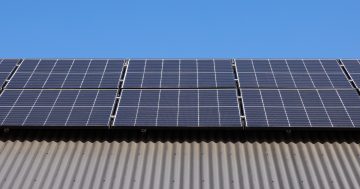
Documents lodged with a state panel reveal the proposal has an $8 million price tag. Photo: Oliver Jacques.
Snowy Mountains farmers have urged a state planning body to reject a proposed solar farm, despite it being recommended for approval by their council.
EDPR Australia has lodged plans for the development, which would be located off Anglers Reach Road, about nine kilometres south-east of Adaminaby.
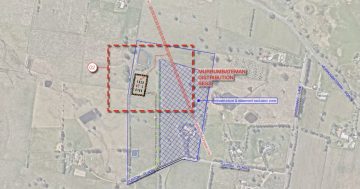
It’s proposed the 48-hectare site become home to about 10,260 solar modules, a battery energy storage system (BESS), a new power pole, vegetation screening and associated infrastructure.
The proposed development would take up about 12.25 hectares.
In late October, Snowy Monaro Regional Council (SMRC) recommended to the NSW Southern Regional Planning Panel that it be conditionally approved.
In a public meeting, a council town planning officer said SMRC had judged the proposal to have limited impacts on rural land uses and visual amenity.
He also said the soil at the site had been judged as having “moderate to low” capacity and that a nearby property would only have “a very small portion” of its view affected.
But the panel members also heard from multiple farmers who called on them to knock back the plan to protect the area’s rural lifestyle.
One speaker said that “Snowy 2 and everything else” was already risking the area’s tourism prospects, which was the “only thing we have going”.
They said the area just wasn’t suitable for the solar farm.
“It seems that every time we turn around, the authorities and the local council and everybody forgets that Adaminaby’s had a tough time … the only thing that we’ve got left to us is the mountains.”
An argument that the proposal wasn’t supported by the community was echoed by a farmer based several kilometres from the proposed site.
She said that while she and her neighbours had been approached by different solar companies, not one had agreed to hand over use of their land.
“That proves that no-one in the direct vicinity [of the Anglers Reach Road site] or the community wants a development like this,” she said.
She also believed there wasn’t community confidence that Adaminaby would benefit from the planned development going ahead.
“Our little area is hurting significantly … If they’re saying that this project will bring economic value to our area – it’s a falsehood,” she said.

If given the green light, the solar farm will cover 12.25 hectares of the site. Image: Supplied.
Another speaker urged the panel to follow a 2013 standard adopted by the council in 2013, which sought to protect Adaminaby and Lake Eucumbene’s rural character.
“My question is very simple – what’s changed since 2013?
“Simply saying, ‘It’s not viewable from the land [is] pretty weak … Why is an industrial-scale solar and battery development being considered within it now?”
One speaker took aim at the decision not to re-exhibit a revised environmental study, arguing this gave the community an incomplete view of the proposal.
“That document was never readvertised or re-notified, and it should have been,” he said.
“No member of the public has seen that document – and even if they did, it wasn’t open for submissions.”
The proposal was initially lodged with the council in December 2025, while a revised statement of environmental effects was lodged in August 2026.
This followed the council adopting a new policy relating to renewable energy developments.
But a man speaking on behalf of applicant EDPR Australia said the decision not to re-exhibit the document was at council’s discretion.
“It really should not have had an impact,” he said.
He also said that native plants endemic to the area would be chosen for vegetation screening around the solar farm.
Maintenance teams would also visit regularly to mow grass that could become a bushfire risk.
He also said that, as part of the decommissioning process, “absolutely everything” would be removed and no legacy infrastructure would remain at the site.
The panel heard that two nearby sites were expected to experience glint and glare, but this would be at specific times and dates only.
Another speaker said the arrays could be manually controlled to reduce the glare for those locations, which are at a nearby property and along Anglers Reach Road.
“That can easily be programmed into the schedule,” he said.
If approved, the solar farm would operate for 35 years.
The panel is expected to publish its decision later this month.