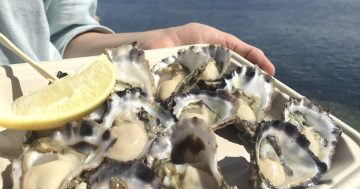
The Oyster Barn is the retail outlet for Merimbula Gourmet Oysters. Photo: David Rogers Photography.
Second-generation oyster farmer Dom Boyton does things differently and it is getting noticed.
His smoked oysters won the championship at the Sydney Royal Easter Show last year and he is part of an emerging movement in the seafood industry that not only interrogates producers’ practices but also traces the produce from the time it is harvested to when it is served.
Merimbula Gourmet Oysters is the only farm in NSW growing the native angasi oyster. They have been used in reef restoration projects in Botany Bay and Narooma’s Wagonga Inlet.
After leaving school, Mr Boyton studied aquaculture at the University of Tasmania. He returned to the oyster farm at Millingandi full time in 2000.
“We do things a little bit differently,” he said. “It is the little things that make the big difference.”
The farm is large, allowing him to spread out his stock to give them more room to do what oysters do. That also protects the leases, keeping them pristine.
While some oyster farmers concentrate on the bottom line and getting their oysters out the door, Mr Boyton gives his oysters another six to 12 months to grow, rather than forcing them to develop, which he says results in a better product.

Dom Boyton farms oysters around Millingandi. Photo: Merimbula Gourmet Oysters/Facebook.
He has been growing angasi oysters since 2000 and exporting them to China. COVID brought that to a halt, leaving Mr Boyton looking for a new market.
“They are really great oysters, so I started smoking them,” he said. “They have gained an enormous following, so we are changing everything to get more out there.”
He has moved from bottling the delicious smoked morsels to tinning them to improve their shelf life and shelf stability. Mr Boyton said the tins were pretty because it had become “quite a thing” to have the oysters served in the tin on the table.
The Happy Fish Project started in Bondi out of concern about sustainability practices in the seafood industry. It approached Mr Boyton to ask whether he was going to be certified as sustainable. A series of site visits and interviews with Happy Fish Project’s panel of scientists followed.
“It took three and a half years investigating what we do and why, and our practices on the land and in the water,” Mr Boyton said. “We know what we are doing is good for the environment and the oyster, but standing back from the business and asking what we can do better has been a very good process.”
The Happy Fish Project also traces produce back to the source and the fisher.
“Consumers can see a photo of me and track the oyster all the way from me harvesting it to their plate, and there is no mixing of batches,” Mr Boyton said.
That traceability appeals not only to consumers who want to know where their food comes from, but also to Mr Boyton, who is concerned about mislabelling.
At times, Merimbula’s lakes and estuaries have been closed by rain, yet some restaurants were offering oysters supposedly from Merimbula.
“Mislabelling damages our industry and all producers,” Mr Boyton said. “It may not be a sub-par product, but if someone has an issue with that oyster and that oyster couldn’t have come from Merimbula, then the whole traceability system has collapsed.”

Dom Boyton (far left) won the men’s bronze medal at the 2026 Australian Oyster Shucking Championships. Photo: David Rogers Photography.
Being a second-generation farmer, he and his parents have seen “massive” change in the industry. In addition to moving from tarred sticks and timber trays to floating bags, the introduction of grading machines has brought efficiencies.
“When I was a kid, it was a struggle to be consistently profitable,” he said. “Now, with these new methods and efficiencies of growing, that has changed so much. It is more sustainable on your mental health and a lot less wasted effort than when growing them on sticks and trays.”
Warmer, windless and more humid summers have also led them to harvest earlier in the day.
“That makes a better product and a safer one,” Mr Boyton said. ”In the past, we would leave them sitting in the shed, but you can’t do that anymore.”
Mr Boyton said even locals didn’t understand “the secret world of oyster farming”.
“People say you guys have the best job, but people don’t realise the effort to grow something that is gone in two seconds.”
Oyster farmers handle each oyster about 20 times during its life cycle. Then someone must pick up that oyster and open it for it to be consumed.
“It is an amazing amount of work that goes into something that is so small,” Mr Boyton said.