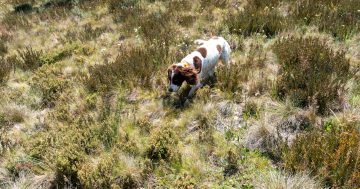
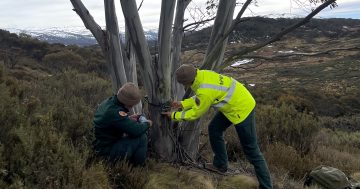
Orange weed eradication efforts were among 41 projects given a share in more than $6 million in funding. Photo: Local Land Services.
“It’s like trying to pick something nasty out of a really good salad.”
That’s how Good Neighbours Program project manager Dale Kirby describes efforts to eradicate orange hawkweed from the Monaro Region.
The invasive weed was first detected in Kosciuszko National Park in 2003, with the NSW National Parks and Wildlife Service (NPWS) beginning eradication efforts that same year.
The NPWS-led program recently received more than half a million dollars in funding for its efforts.
It is one of dozens of pest and weed management initiatives across the state to receive funding through the Good Neighbours Program, delivered by Local Land Services.
Mr Kirby said the extra resourcing would set their efforts up for success in the longer term.
“We can’t go in there and do a broad-scale application [with pesticides], because that has a damaging impact on the environment – we’re damaging all those native species around there,” he said.
“We’re really just trying to effectively remove the orange hawkweed.”
The partnership means the NPWS team can grow their surveillance through expanded capacity around drones, helicopters and other detection measures.
They can also add extra seasonal field staff to carry out on-the-ground control.
Orange hawkweed grows quickly in dense mats in cool climates, outcompeting native plants and threatening native animal habitat.
It was introduced from Europe and has since spread to parts of Kosciuszko National Park and neighbouring private land.
It means agricultural landscapes across the Monaro Plains are at risk.
To fight the weed, the NPWS uses targeted herbicide sprays, conducts information campaigns with local landholders, trains dogs to sniff out the weed and partners with Snowy Monaro Regional Council.
It’s all carried out in the hope of allowing native species space to regrow.
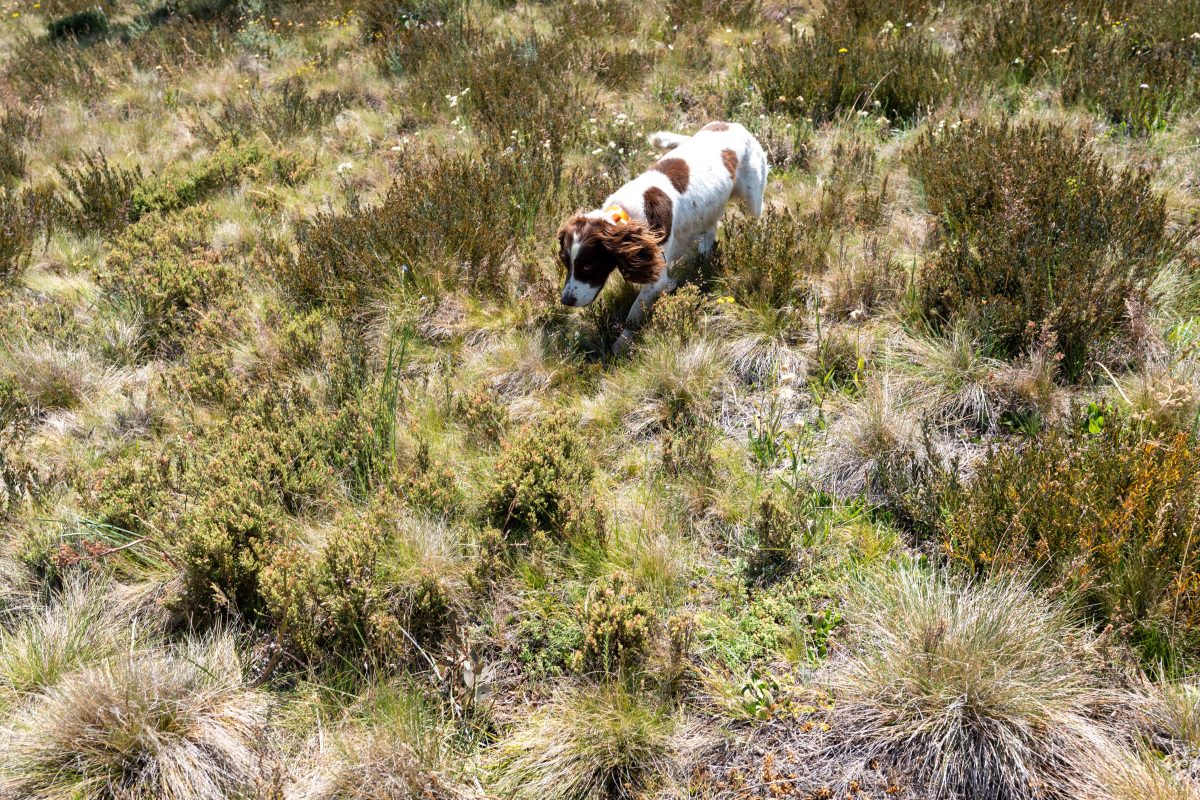
Connor is one of the detection dogs that hunts orange hawkweed. Photo: Department of Climate Change, Energy, the Environment and Water.
Between October and April, NPWS workers surveyed more than 5000 hectares of Kosciuszko National Park and some neighbouring private land.
They found 0.15 hectares of orange hawkweed.
But Mr Kirby said their efforts remained important.
“While a pest is at a small scale, that is the best investment that we can spend,” he said.
“We’re better off doing this work now and investing the money rather than being complacent and letting this weed spread outside the park and into grazing areas all across south-east NSW.”
NPWS senior project officer hawkweed management Emma Chapman-Davies said the extra resources supported their efforts.
“This helps us determine whether we’re on track to meet our eradication targets,” she said.
“Information is power when it comes to managing pests and weeds, and more data helps us deliver more strategic, long-term control of orange hawkweed.”
Mr Kirby encouraged anyone with concerns around biosecurity (including invasive species) on their properties to reach out.
“Probably the biggest takeaway for this is that pests and weeds don’t respect your boundaries – they don’t stop at the boundary fence [of a property].
“If you’ve got a problem with a pest or weed, letting someone know about it early is really critical in the management. … It’s not a silver bullet, but it’s just good practice to work together across boundaries to reduce these impacts.”
Any detections of hawkweed (along with pictures and a location) should be reported to the NSW Biosecurity Hotline on 1800 680 244, or NPWS on 02 6450 5565, or email [email protected].